
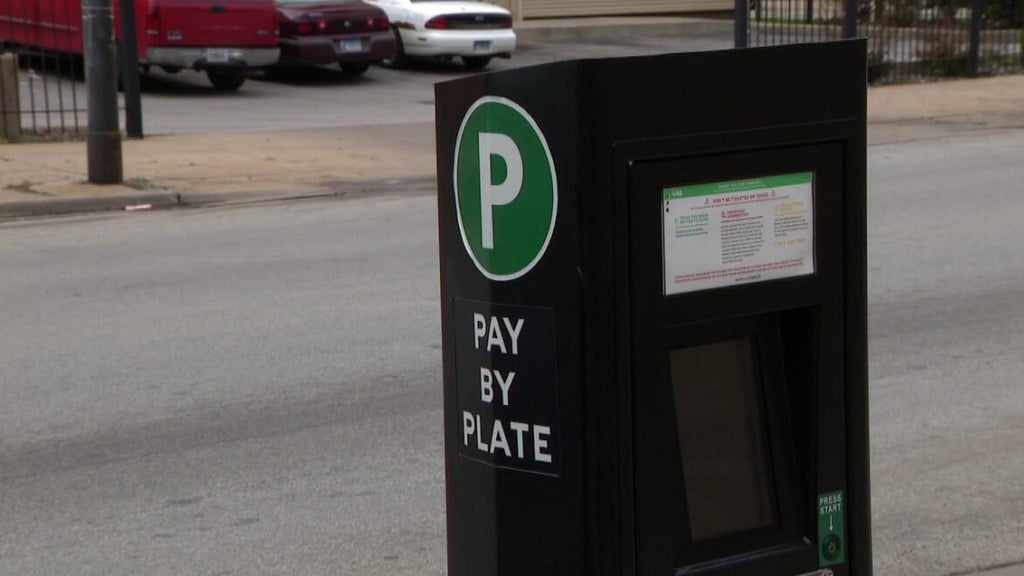
The City Council on Tuesday approved a deal allowing Chicago's privatized parking meters to be sold to a new company, with the city receiving a share of the profits going forward.
The 46-3 vote means the remaining 57 years of the deal to lease the city's parking meters to Chicago Parking Meters LLC will be bought out by New York-based Stonepeak Partners, LLC for $2.53 billion.
The deal was negotiated by Finance Committee Chair and Ald. Pat Dowell (3rd), Ald. Nicole Lee (11th), Ald. Walter Redmond Burnett (27th), Ald. Scott Waguespack (32nd), and Ald. Gilbert Villegas (36th).
Then-Mayor Richard M. Daley's 2008 deal to lease the city's parking meters to Chicago Parking Meters LLC in exchange for a $1.15 billion lump payment is widely considered to be one of the worst financial moves in the history of municipal politics. Mayors since have worked, and largely failed, to find a way for the city to recoup any of the revenue coming from parking fees since.
Dowell, who led the negotiations on the agreement to sell the parking meters to Stonepeak, argued that the deal originally presented to the City Council in June had no benefit to the city, but alders were able to negotiate a number of benefits to make it palatable.
"I believe the deal that you all are going to vote on today is 10 times better than the deal that we voted on in 2008," she said. "I think through gritty and nuanced negotiations, and by facing the hard-hitting truth, I think today we delivered to all of Chicago a better deal than we delivered in 2008, and we'll continue to fight for other improvements."
With the sale of the parking meters to Stonepeak giving the city a share of the profits from parking meter revenue for the first time since the meters were sold, supporters of the deal argued the city has finally been able to "make lemonade out of lemons."
"Yes, we were given a bad deal back in 2008. We tried to break it open, and this is what we got," Waguespack said. "I don't like the whole deal. I don't like it from 2008, but this is the best deal that we could get on the table."
Mayor Brandon Johnson, who was not part of the negotiations to allow the sale of the parking meters to Stonepeak, hailed the deal as "a stronger agreement than what was there before.
"You know, at the very least, Chicagoans were at the table. That did not happen before," Johnson said. "I'm grateful again for the leadership that City Council displayed. Unfortunately, there are a number of bad deals that the city has had to endure. We've inherited quite a few of them, and we're working hard every single day to show up on behalf of the people of this city."
The had city faced a Sept. 30 deadline to either approve the sale of the parking meters to Stonepeak or risk having to fight the deal in court.
In it, the city would get an up-front payment of $75 million immediately upon the transfer of the meters to Stonepeak, then an additional 5% profit share from the annual net income of the meters for the duration of the lease. City officials have estimated that profit share amounts to about $367 million over the 57 years.
However, Ald. Bill Conway (34th), a former investment banker with JP Morgan and an adjunct finance professor at DePaul University, argued that after Stonepeak is able to factor in the costs of its interest expenses and depreciation of the parking meters, the city will likely end up netting around $140 million in profit sharing over the course of the deal.
Nonetheless, Conway argued, "It's still a win for the taxpayers, it's just not quite the big win that I thought it was."
The deal approved by the City Council earmarks the money the city will receive from the parking meter sale to pay Chicago's ongoing employee pension obligations.
Ald. Jason Ervin (28th), one of the three alders who voted against the sale of the parking meters to Stonepeak, had previously argued the city should set up an infrastructure trust to buy back the meters itself.
He argued the city could have negotiated better terms with Stonepeak, noting the deal does nothing to rein in the company's ability to raise parking rates citywide.
"I think that history will judge us poorly. Just as it has judged the '08 Council, in years it will judge us poorly for this as well. While we've created some level of financial ability, we've done nothing for the residents in this transaction," he said.
Ald. William Hall (6th) argued that alders did not do enough to make sure Black-owned companies got a share of the deal, saying none of the lead advisors, accounting firms, or lobbyists involved in the deal are African American-owned companies.
"I stand to say that this is not the city that we all are dreaming of. It's about the principle and the particulars. The principle ought to be if 27% of folks in this city are Black, then there should be 27% participation in the deal," he said.
Under the deal, Stonepeak also announced its subsidiary, Air Transport Services Group, reached an agreement to sell Omni Air International, a cargo airline it owns that provides long-haul deportation flights for the U.S. Department of Homeland Security. Several alders had raised concerns about Stonepeak's ownership of Omni, given its role in immigration enforcement and mass deportation operations that have impacted city residents.
Burnett said he was proud that alders were able secure the sale of Omni to address concerns from progressive alders about the airline's involvement in deportations.
"We should also be very proud that we are trying to fight for a better future for this city within this contract, and making lemonade out of lemons," Burnett said.
In addition, Stonepeak agreed to establish some non-metered blocks in Chicago as potential electric vehicle charging stations, then operate them while sharing revenue between the city and the company.
The company also agreed to make sure at least 50% of the employees working on the parking meter system are Chicago residents.
If Stonepeak attempts to sell the parking meters to another company, it must provide the city with 30 days notice and submit a recommendation to Chicago City Council, which will then have 90 days to consider to approve or disapprove the proposed transfer. The city also would receive an additional payment of 2% of the sale price.
After the vote on Tuesday, Johnson declined to speculate on discussions within the City Council to pass companion legislation to set future parking meter rate increases, possibly by tying them to the rate of inflation. Alders also have discussed possibly passing legislation setting lower parking rates for Chicago residents.
"I'm always going to support measures that will provide a fairer structure on how revenue is generated," Johnson said.
The council was originally set to vote on the deal in a special meeting Friday, but Dowell and Waguespack moved to delay the final vote until Tuesday after learning Ald. Jason Ervin (28th) was going to move to stall the vote. Doing it themselves gave Dowell and Waguespack more control over when to call the final vote.
The Johnson administration explored the possibility of buying back the parking meters after Chicago Parking Meters first sought potential buyers last year, and even made a $3.2 billion bid, but later backed out after determinining that purchasing the meters would be too expensive, requiring the city to take on a massive amount of debt. As a result, any revenue from the meters would have had to pay off that debt for the next 40 years, effectively forcing the city to raise parking rates annually to cover costs.


